

Growing from seed
Thanks for buying our seed! We hope you get as much joy producing gorgeous flowers from tiny seeds as we do.
But firstly, a quick note on why we have started saving (and selling) our own seed. A lot of the seed you can buy is imported. My business is built on the ethos of reducing the distance flowers travel to their end destination so I am keen to use more of own own or locally source seed. Also, if a plant has thrived on my land, in my growing conditions, and set an abundance of seed, then it stands to reason that the seed produced is likely to have started adapting to the conditions it grows in. These 6 seeds are staples for my business AND ones that I found really only germinated well from very fresh seed. We’ve included below the basic info you need to get started, as well as growers notes for each, based on what’s worked for us in Carmarthenshire - please feel take what you need and leave the rest. Happy growing!
Orlaya
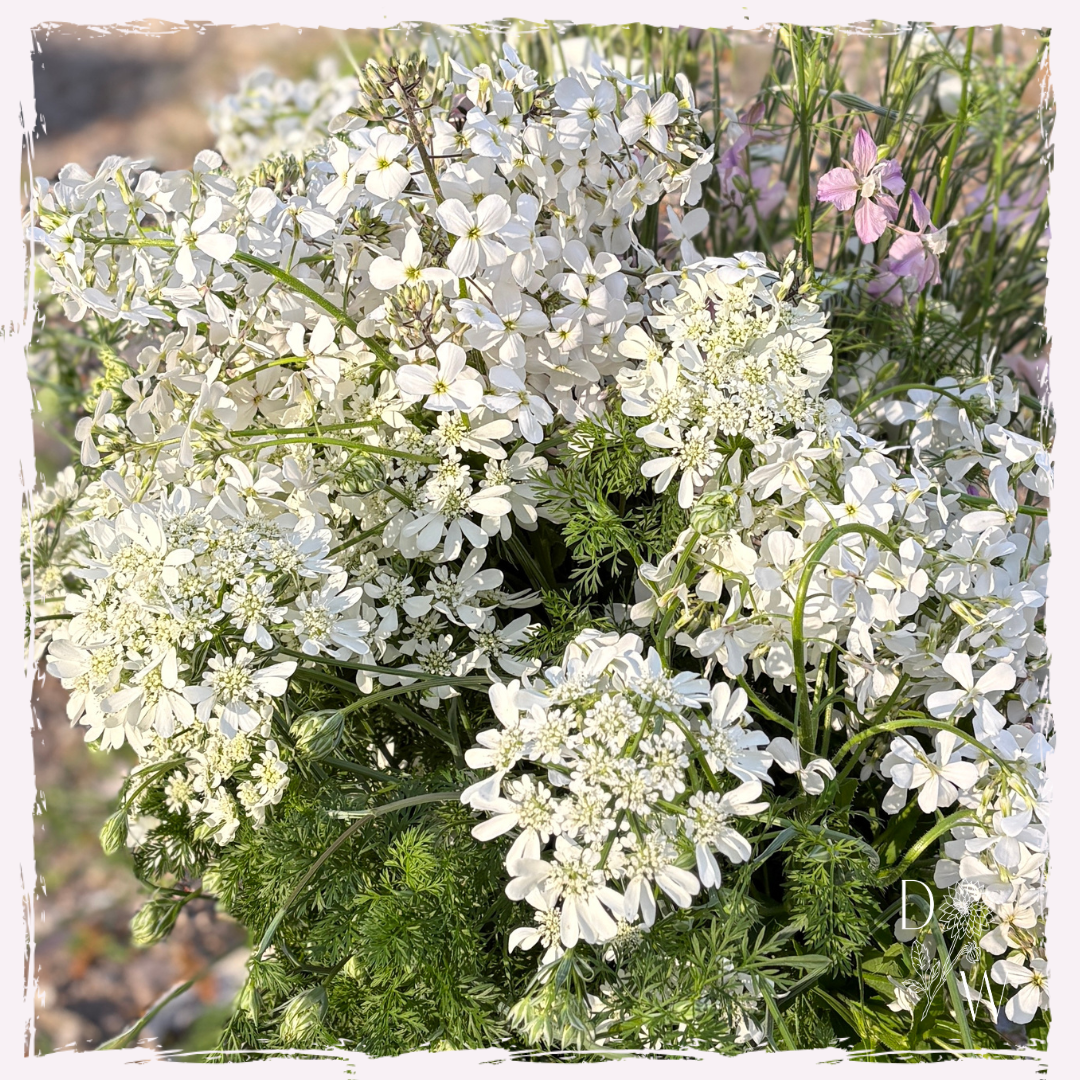
When to sow: August/September or March/April
Where to sow: Direct into bed, in drills
Depth: Very shallow - needs light to germinate
Time to germination: 14 - 21 days
Growers notes: Orlaya can be a bit tricky to germinate so a little patience is required. I have noticed a pattern with seeds that are tricky to grow….most of them self seed all over the place. So, one can only assume that they like to germinate on their own terms and not on ours!
Here are our top tips to get these little divas going. Firstly, the seed needs to be really fresh. Our preferred method is to direct sow, in the autumn (late August/early September) into the bed, in drills. This works really well as it mimics how they would self seed. Give them 2 to 3 weeks and you should see them start to pop up. Orlaya like light to germinate. However, I find if direct sown they are very happy with a light covering of compost. If you are going to be growing them outside then direct sowing may not work so well. Use a large tray, scatter a generous number of seeds and cover very lightly with compost or vermiculite. I often put them in the fridge for a few days to mimic a cold spell - the change in temperature seems to spring them into action. Once they germinate, prick out in modules to grow on. Orlaya are very hardy.
We haven’t ever had success sowing straight into modules.
Iceland Poppies
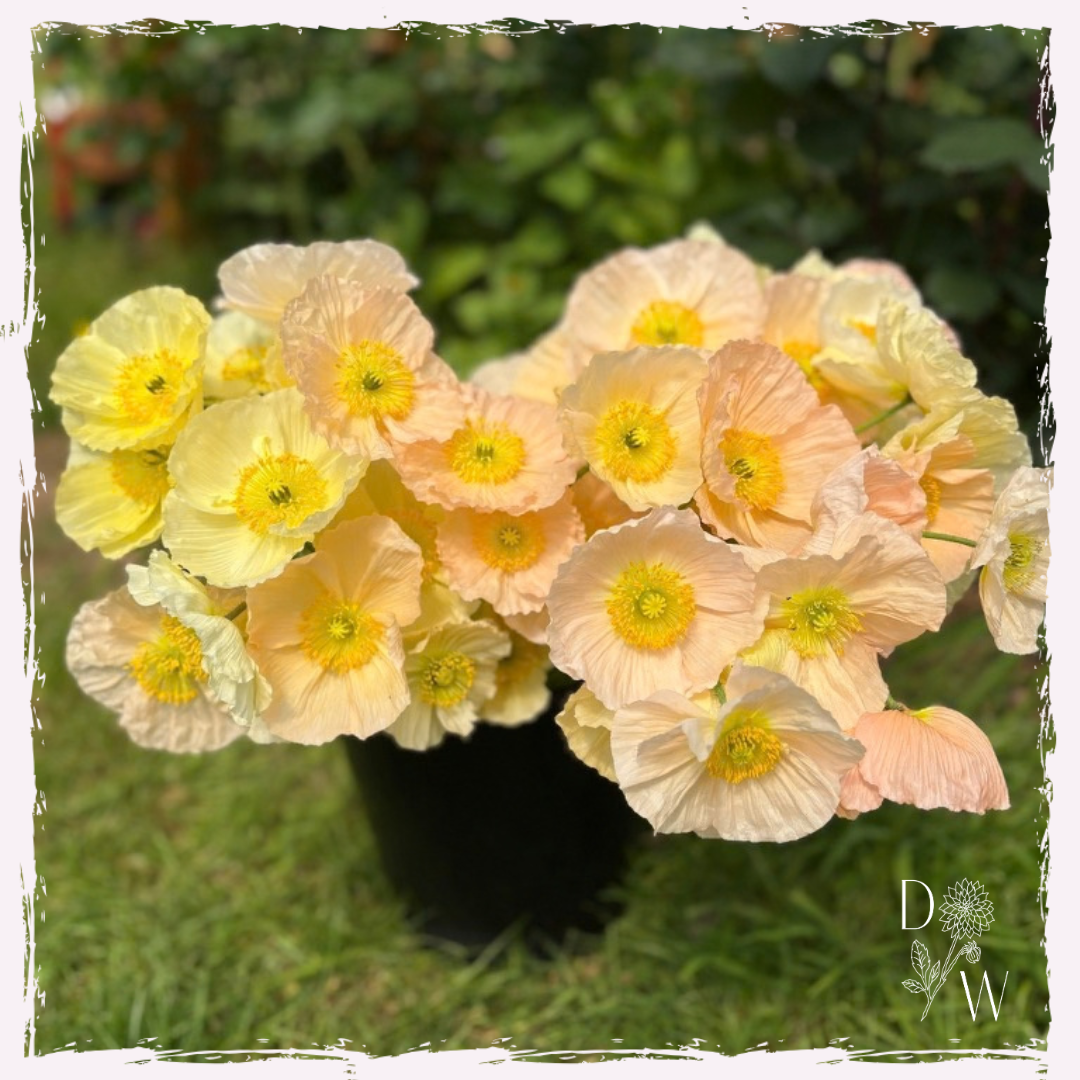
When to sow: August/September or January-March
Where to sow: Indoors, seed tray/module
Depth: Surface/very shallow - needs light to germinate
Time to germination: Approximately 14 days
Growers notes: Iceland Poppies germinate incredibly well from very fresh seed. They need light to germinate and they generally take up to 14 days to appear. We start ours in early August (if we are organised) but we have had success starting them as late as January.
They need warmth to germinate so use either warm August weather, a sunny windowsill or a heat mat. The trickier bit is keeping them alive once they have germinated- they are prone to damping off, and grow incredibly slowly.
We have had success with 2 methods. Either:
Sow into a small propagation tray and cover very lightly with vermiculite, (we use a lid on the tray and a heat mat underneath if temps are cool). Once they have germinated and grown on well we prick out into modules. They hate root disturbance but if they go into good seed compost and have a dilute seaweed feed they seem to tolerate it.
Put about 3 seeds into each module in a module tray. This removes the need to disturb their roots by pricking out and they seem to prefer growing in company.
Our experience is to expect at least 30% failure from the pricked out seedlings so we always produce extra.
Corncockle
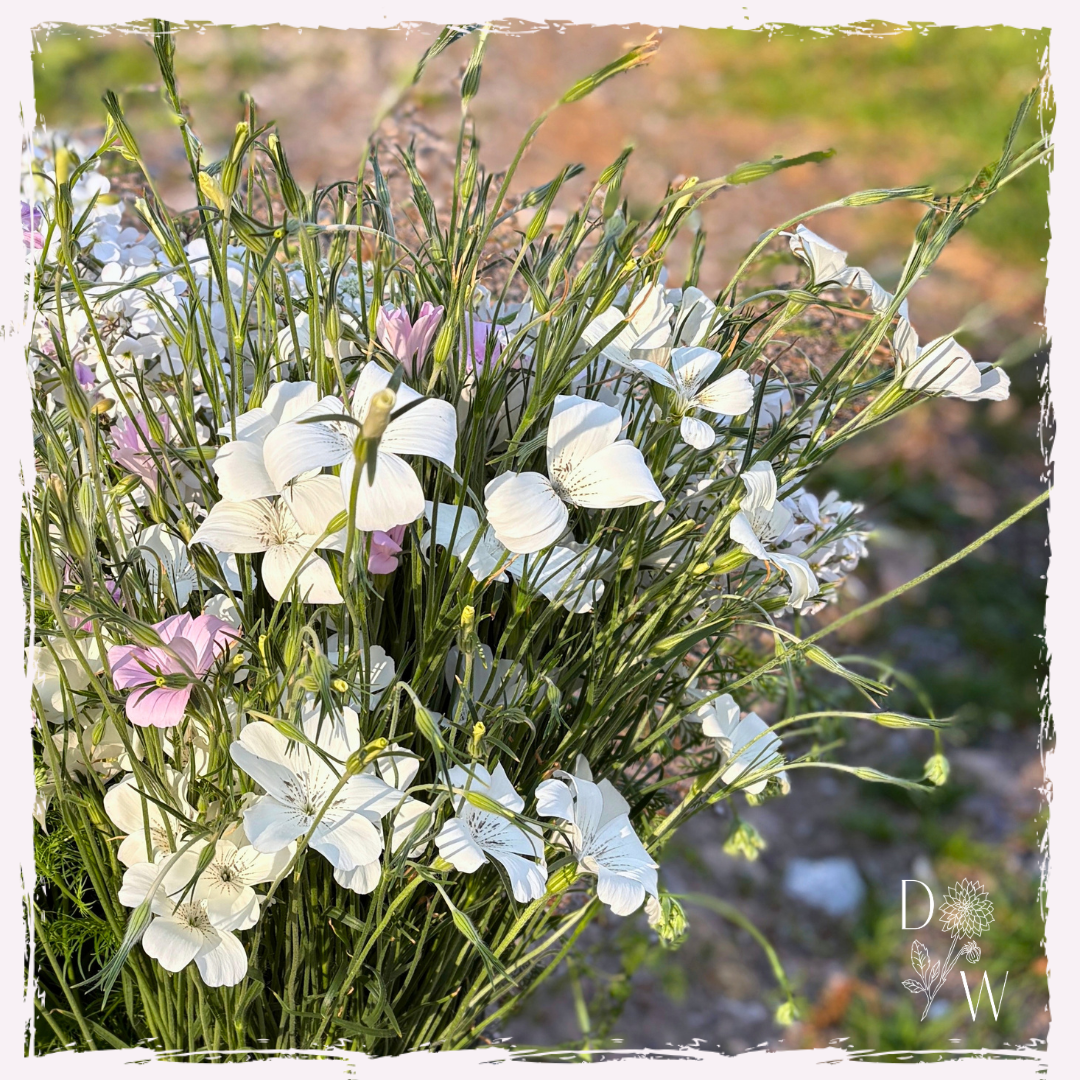
When to sow: September/October or March - May
Where to sow: Trays, modules or direct
Depth: 2mm
Time to germination: 7 - 14 days
Growers notes: Corncockle definitely do well from an autumn sowing. They are tough and hardy and probably the easiest thing we grow! Cover with about 2mm of compost and give them a little warmth.
We tend to favour sowing everything in propagation trays, pricking out into modules and them planting out healthy little plugs but these tough little plants will grow well from being started in trays, modules or direct. Lovely fresh seed will just get on with the job.
Thlaspi
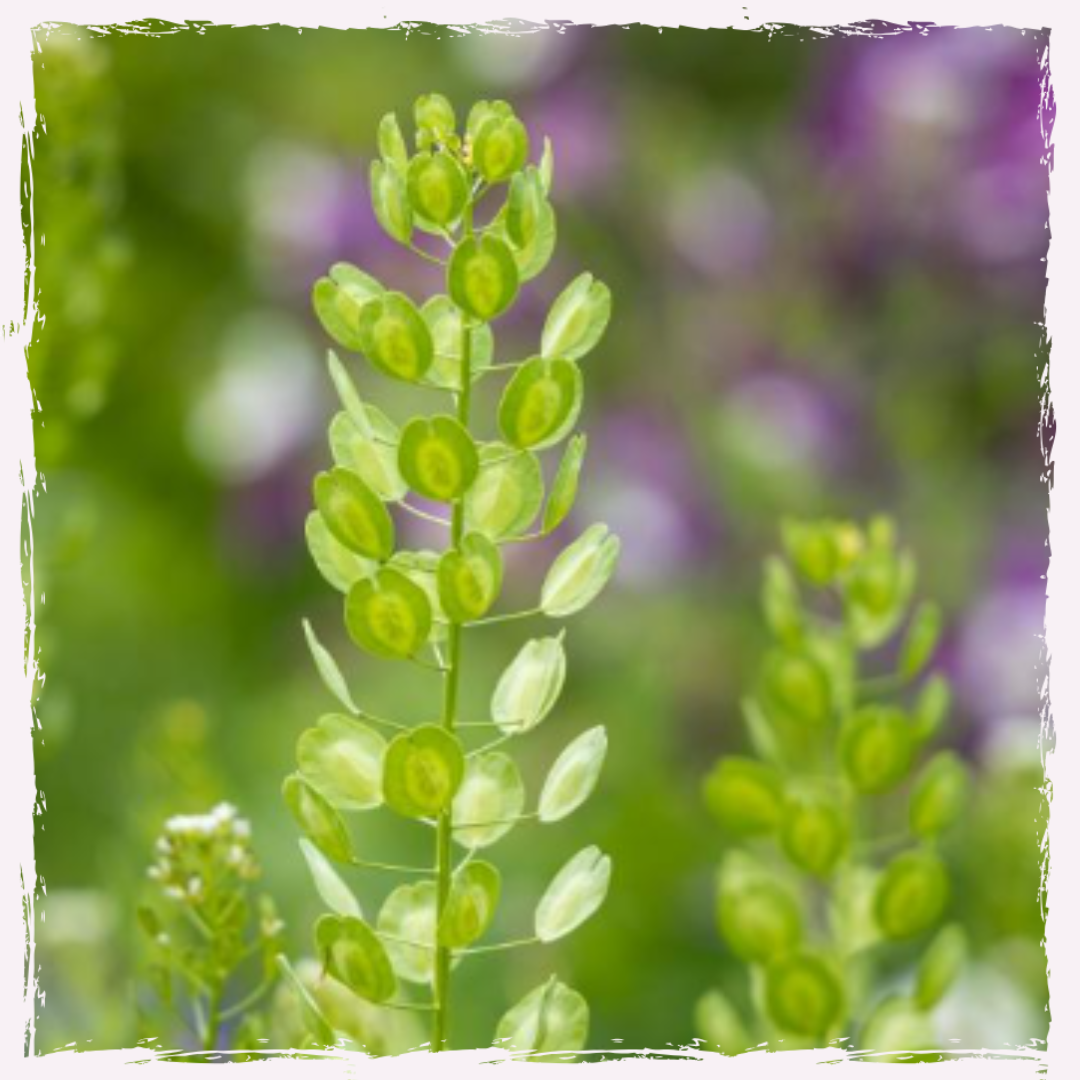
When to sow: September/October or March -June
Where to sow: Direct into beds, in drills, or in seed trays
Depth: Shallow (light covering of compost only)
Time to germination: 14 - 21 days
Growers notes: We like to sow Thlaspi in the autumn to overwinter because it produces lovely big branchy plants and a very useful early crop in the spring where greenery feels like treasure.
We have found them to be relatively trouble free to grow, but seed needs to be fresh. Either direct sow in drills with a light covering of compost, or sow in propagation trays with a light covering of compost and then prick out into modules. The one thing they do hate is being in small cell trays for too long, they bolt and flower too soon, so pot them on regularly or plant them out as soon as they look ready.
Larkspur
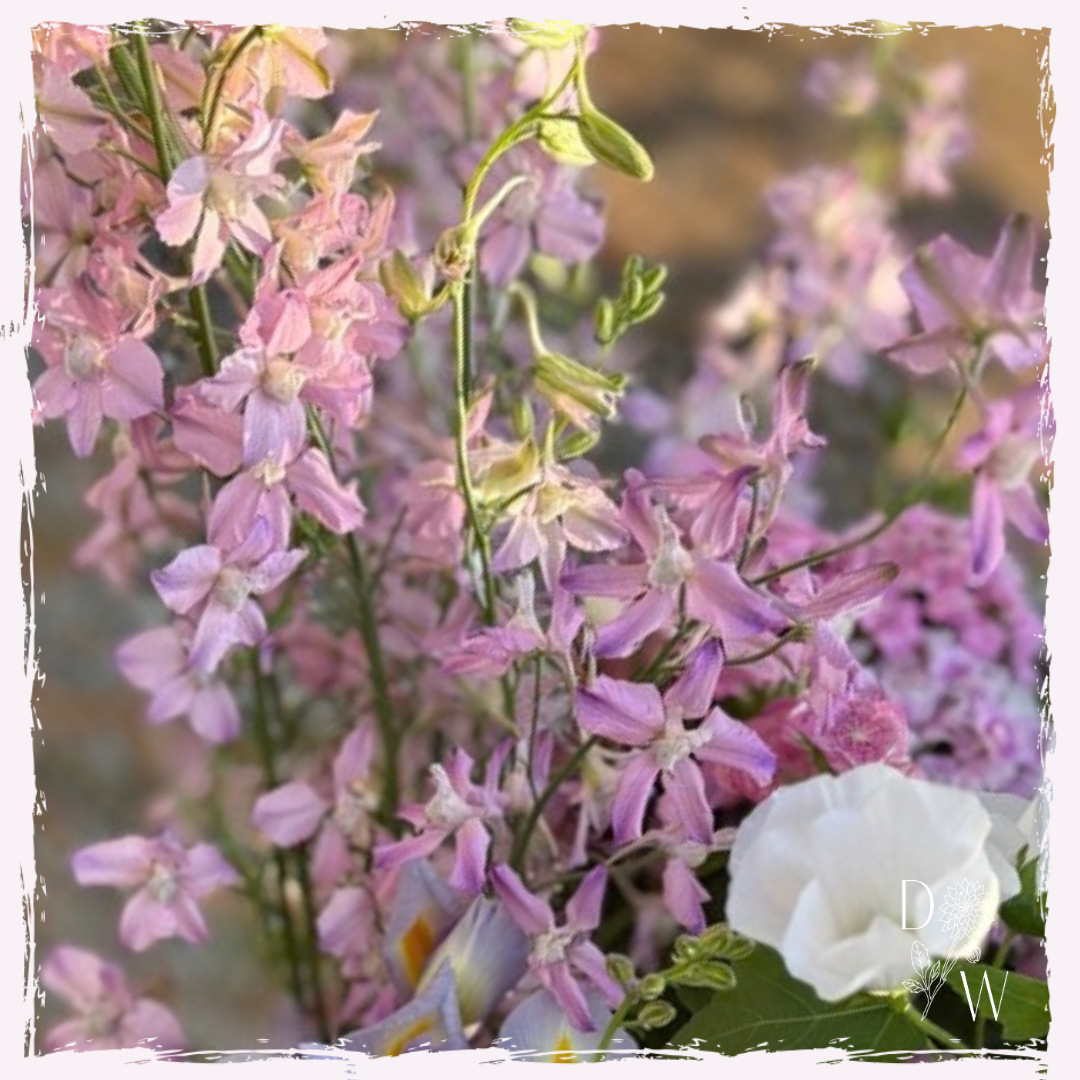
When to sow: September/October or January - March
Where to sow: In seed trays
Depth: Surface sow but exclude light (see notes below)
Time to germinate: 14 - 21 days
Grower’s notes: Larkspur, probably the most talked about amongst growers as being the trickiest to germinate. They like cooler temperatures and fluctuating temperatures to germinate. Our seed has been in the fridge so this should have started the process for you.
We have found they like to be sown on the surface with a little covering of vermiculite but we also exclude light by putting a piece of cardboard on top of the tray. You do need to check them every day if you use this method so as soon as germination starts you can remove the cover so they don’t get yellow and leggy. They don’t like root disturbance so prick them into modules gently into good seed compost and give them a dilute seaweed feed to help them settle well.
Omphalodes
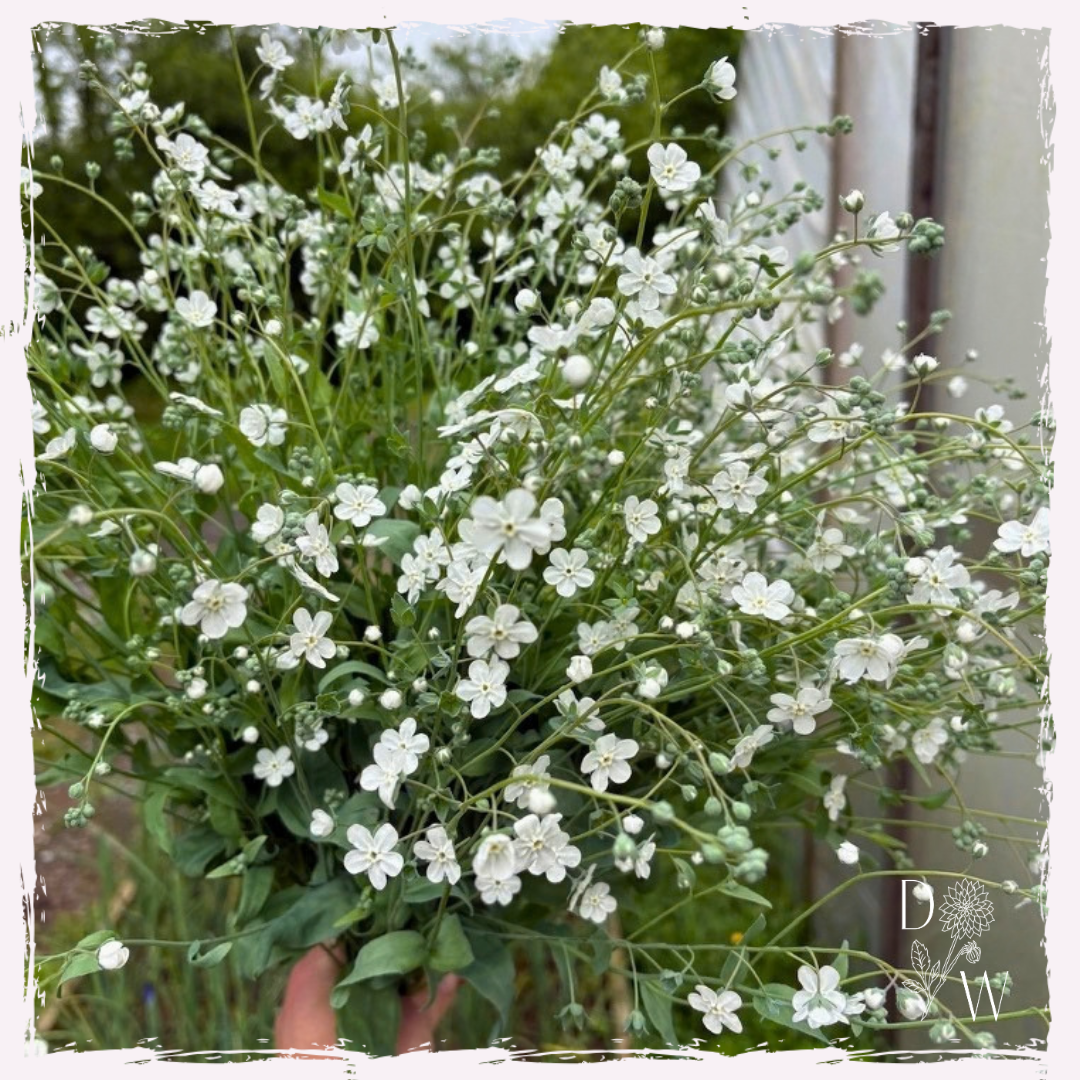
When to sow: September - October or March - April
Where to sow: In seed trays
Depth: Cover with compost, approx 3mm
Time to germination: 7 to 14 days
Grower’s notes: These dainty little flowers tend to grow best from an autumn sowing. We sow them into propagation trays and cover them with compost.
They take a little while to wake up and germinate but they emerge into nice strong seedlings which can be pricked out into modules fairly quickly and grown on before planting out.